Business model and software-as-a-service.

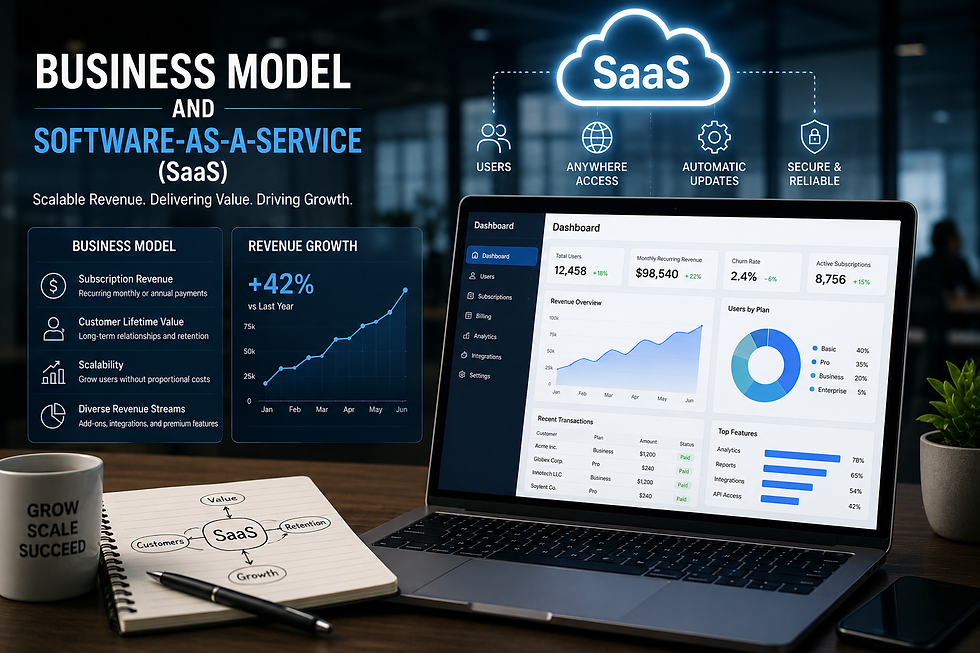
The media industry is rapidly adopting Software-as-a-Service (SaaS) solutions to improve content management, publishing, analytics, and audience growth. Instead of building expensive in-house systems, many publishers now subscribe to cloud-based platforms that provide the tools they need through a monthly or annual payment model. This approach has created new business opportunities for technology providers while helping media companies reduce costs and scale faster.
As Artificial Intelligence becomes more important in digital publishing, SaaS platforms are becoming the foundation of many modern media operations.
Understanding the SaaS Model
Software-as-a-Service is a business model where software is delivered through the cloud and accessed through a web browser. Customers do not need to install or maintain complex systems on their own servers.
Instead, they pay a subscription fee to use the platform and receive regular updates, security improvements, and new features. This creates a predictable revenue stream for software providers and reduces upfront costs for customers.
In the media industry, platforms similar to Newsbolts offer cloud-based tools that help publishers manage content, automate workflows, and improve digital operations.
Why Publishers Choose SaaS Solutions
Traditional software often requires large investments in infrastructure, maintenance, and technical staff. SaaS platforms remove many of these challenges by providing ready-to-use solutions.
Publishers benefit from faster deployment, lower setup costs, and the flexibility to expand as their audience grows. Since everything is managed in the cloud, teams can access the platform from anywhere and collaborate more effectively.
This makes SaaS particularly attractive for digital-first media companies.
Revenue Opportunities for SaaS Providers
The SaaS business model offers several ways to generate revenue. Most platforms use subscription-based pricing, where customers pay monthly or yearly fees based on usage, features, or team size.
Some providers also offer premium services such as advanced analytics, AI-powered automation, custom integrations, enterprise support, and additional storage options.
As customers grow their operations, they often upgrade to higher-tier plans, creating long-term recurring revenue for the platform provider.
Scalability and Long-Term Growth
One of the biggest strengths of SaaS businesses is scalability. A single platform can serve hundreds or even thousands of customers without requiring major changes to the core product.
This allows software companies to grow efficiently while continuing to improve their technology. As demand for AI-powered publishing tools increases, SaaS providers have significant opportunities to expand into new markets and industries.
Conclusion
Software-as-a-Service has become a powerful business model in the modern media industry. By providing cloud-based tools through subscription plans, SaaS platforms help publishers reduce costs, improve efficiency, and scale operations more easily. At the same time, software providers benefit from recurring revenue and long-term customer relationships. As AI and digital publishing continue to evolve, SaaS solutions are expected to play an even bigger role in shaping the future of media technology.



Comments