Hiring Your First AI Newsroom Assistant

Why Newsrooms Are Turning to AI
The modern newsroom moves at an incredible speed. Journalists must research stories, monitor breaking news, create content, manage publishing schedules, and track audience engagement. As workloads continue to grow, many publishers are looking for ways to improve efficiency without increasing costs. This is where AI newsroom assistants are becoming valuable.
An AI newsroom assistant is not meant to replace journalists. Instead, it acts as a support tool that helps teams complete routine tasks faster and focus more on reporting and storytelling.

Understanding the Role
Before hiring your first AI newsroom assistant, it is important to understand what it can do. AI tools can help with content research, article summaries, headline suggestions, keyword analysis, transcription, scheduling, and workflow management.
By handling repetitive tasks, AI allows editors and reporters to spend more time on creative and investigative work.
In some modern publishing environments, systems similar to Newsbolts are used to support newsroom operations by combining automation with content management tools.
Choosing the Right Solution
Not every AI tool is designed for the same purpose. Some focus on writing assistance, while others specialize in analytics, research, or publishing automation.
When selecting an AI newsroom assistant, publishers should first identify their biggest challenges. A small newsroom may need help with content production, while a larger organization may focus on workflow automation and analytics.
The best choice is often the tool that solves a specific problem rather than the one with the largest number of features.
Preparing the Team
Introducing AI into a newsroom requires preparation. Journalists and editors should understand how the system works and how it fits into existing workflows.
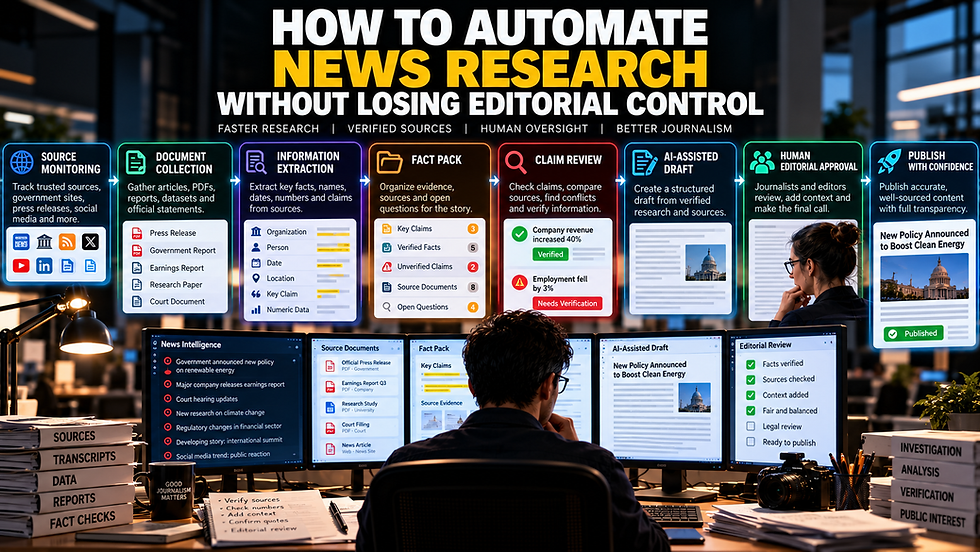
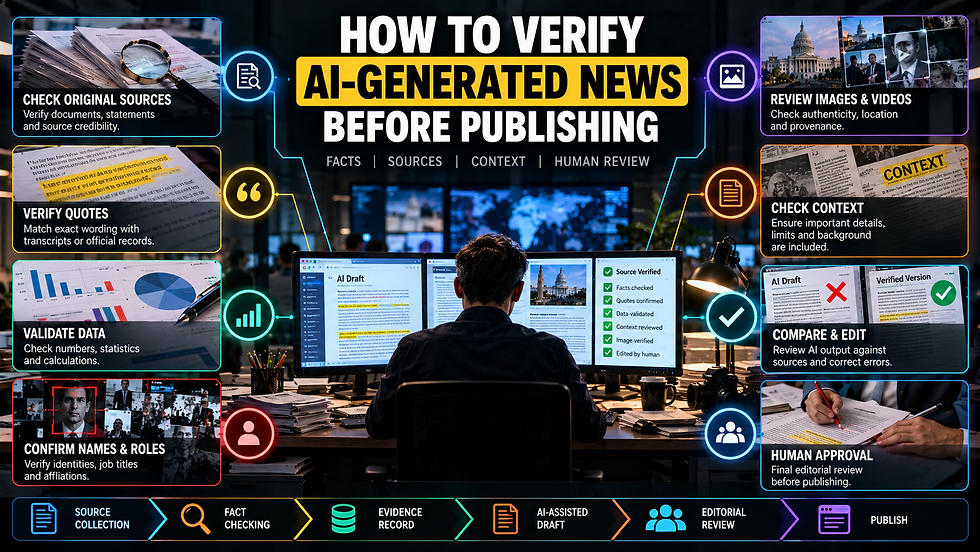
Training is important because AI tools are most effective when used correctly. Team members should know how to review AI-generated outputs and verify information before publication.
A successful implementation depends on collaboration between technology and human expertise.
Maintaining Editorial Standards
One of the biggest concerns about AI in journalism is maintaining quality and accuracy. AI can assist with many tasks, but it cannot replace editorial judgment.
Every piece of AI-generated content should be reviewed by human editors before publication. Fact-checking, context, and ethical decisions remain responsibilities that require human involvement.
Strong editorial standards help ensure that automation improves productivity without reducing trust.
Looking Ahead
As AI technology continues to improve, newsroom assistants will become more capable and useful. Publishers that learn how to integrate these tools effectively can improve efficiency, reduce manual workload, and scale operations more easily.
The goal is not to replace journalists but to give them better tools to do their work.
Conclusion
Hiring your first AI newsroom assistant is an important step toward modernizing newsroom operations. By choosing the right tool, training staff properly, and maintaining strong editorial oversight, publishers can benefit from faster workflows and improved productivity. When used responsibly, AI can become a valuable partner in the future of digital journalism.

Comments