What is AI Journalism and AI Article Writers That Meet E-E-A-T Standards?

Updated: Jul 27
In today's digital age, content quality has emerged as the key to success. This is particularly true in the realm of journalism, where credibility, experience, and authenticity are of paramount importance. It is within this context that AI journalism has emerged, specifically, AI article writers that claim to meet Google's E-E-A-T (Experience, Expertise, Authoritativeness, Trustworthiness) standards.
What is AI journalism?
AI journalism refers to the creation of news, articles, and analysis using artificial intelligence. Today, many media houses are rapidly generating content by utilizing AI tools. These tools produce articles by interpreting data, identifying patterns, and processing language.
However, writing quickly alone is not sufficient. Readers require trustworthy and accurate information and this is precisely where the importance of E-E-A-T comes to the fore.
Why is E-E-A-T important?
Google has developed the E-E-A-T model to assess content quality, which comprises four key elements:
Experience: Does the author have experience with the subject?
Expertise: Does the content demonstrate expertise?
Authoritativeness: Is the source authoritative?
Trustworthiness: Is the information trustworthy?
Articles written by AI must meet all four of these standards; otherwise, they fail to achieve high rankings in search engines.
Can AI Article Writers Pass E-E-A-T?
This is a significant question. Traditionally, AI was perceived as lacking "experience" and "emotional understanding." However, modern AI tools have now become far more advanced.
1. Data-Driven Expertise
AI learns from massive datasets, enabling it to provide in-depth information on any given subject. This enhances both Expertise and Authoritativeness.
2. The Importance of Human Editing
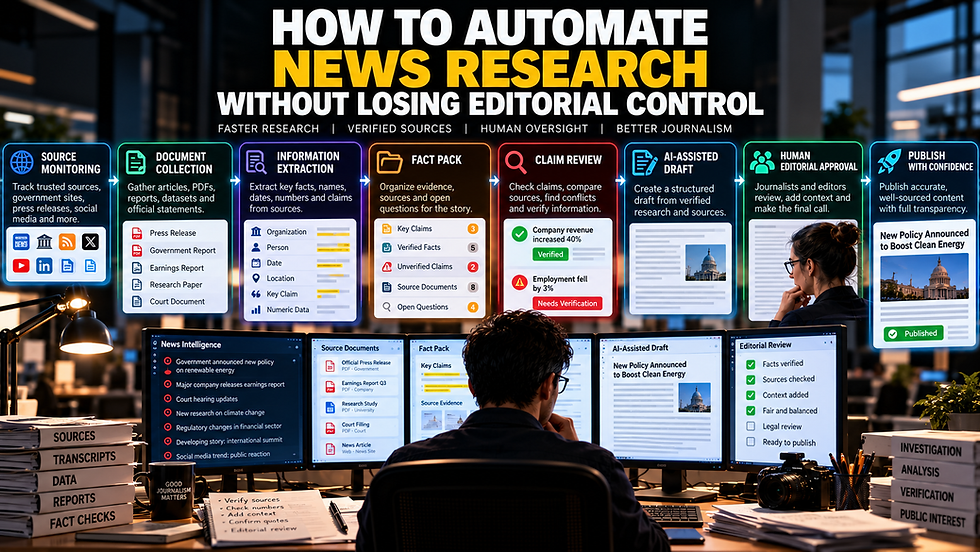
If content generated by AI is reviewed by a human editor, it can be imbued with added experience and credibility. This strengthens every aspect of E-E-A-T.
3. Proper Use of Sources
Advanced AI tools can make content more reliable by citing credible sources, thereby boosting Trustworthiness.
The Benefits of AI Journalism
Speed: AI can generate articles in just a few seconds.
Scalability: Easy to create large volumes of content.
Cost Reduction: More work with fewer resources.
Challenges and Risks
While AI journalism offers numerous benefits, it also presents several serious challenges:
1. The Risk of Misinformation
If AI is trained on flawed data, it can generate misleading information.
2. Lack of Originality
At times, AI-generated content lacks depth or a unique perspective.
3. Absence of Human Empathy
Journalism is not merely about facts; it also involves emotional connection something AI does not yet fully comprehend.
Future Direction
The future of AI journalism lies in a "Human and AI" model. This entails AI generating the content, while humans refine and polish it. Through this collaboration, high-quality content can be produced that also meets E-E-A-T standards.
Conclusion
AI article writers are undoubtedly revolutionizing the content industry. However, relying solely on AI is insufficient to meet rigorous standards such as E-E-A-T. Human experience, editorial oversight, and ethical responsibility remain just as essential.
Therefore, the most successful strategy will be one that strikes a balance between the speed of AI and the insight of human intelligence. This is the true "Editor’s Choice" of the future.


Comments