Why is Generative Engine Optimization (GEO) becoming a new imperative for news publishers?

The world of digital media is changing rapidly. There was a time when the success of news websites relied primarily on Search Engine Optimization (SEO). However, the growing influence of AI-based generative search and chatbot platforms has given rise to a new strategy: Generative Engine Optimization (GEO). This concept is becoming particularly crucial for news publishers as the way readers access information undergoes a major shift.
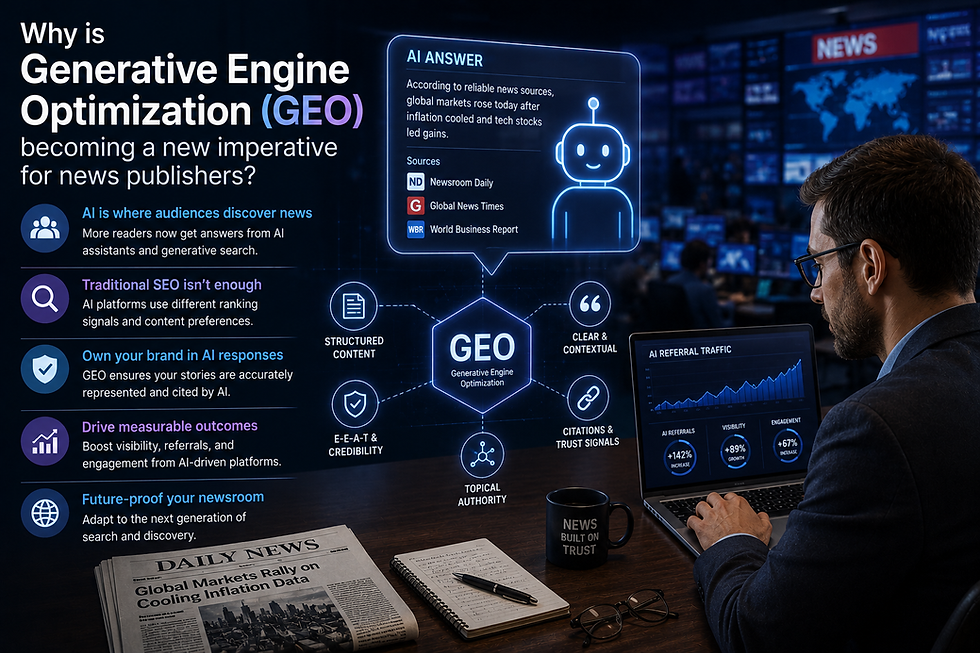
What is GEO, And How Does It Differ From SEO?
Generative Engine Optimization is the process of crafting content so that AI-powered search engines, chatbots, and generative platforms can easily understand, cite, and incorporate it into their responses.
While traditional SEO aims to secure high rankings in search results, GEO focuses on ensuring that AI models use your content as a credible source when answering queries. In other words, whereas SEO targets clicks, GEO focuses on gaining visibility and citations.
A New Challenge For The News Industry
Due to AI-driven search experiences, many users are now obtaining information through chat interfaces rather than visiting websites directly. If an AI provides a summary of a news story, the user may feel less need to visit the original website.
In this landscape, the biggest challenge for news publishers is ensuring their reporting becomes part of AI-generated answers. If a publisher's content is frequently cited, both its credibility and brand recognition are strengthened.
This is why many media organizations are now making GEO a vital component of their digital strategy.
What Changes Are Needed In The Content Strategy For GEO?
Generative Engine Optimization is not limited to technical improvements alone; it requires a shift in the entire content creation process.
First and foremost, clarity and factual accuracy in reporting become paramount. AI models prioritize articles that feature clear data, expert quotes, and credible sources.
Secondly, articles must be well-structured. Clear headlines, subheadings, bullet points, and referenced information help AI systems comprehend the content.
Thirdly, news organizations need to strengthen their "topical authority." Consistent, high-quality coverage of a specific beat, such as politics, technology, health, or the economy, can establish them as trusted sources for AI.
Credibility Will Be the Greatest Strength
In the AI era, simply publishing news quickly will not suffice. News publishers must place greater emphasis on transparency, fact-checking, and source clarity.
Elements such as author identity, expertise, source links, and up-to-date information are becoming indicators of credibility for AI systems. Such signals not only foster reader trust but can also boost visibility on generative platforms.
Digital media and tech analysis platforms like Newsbolts are also focusing on this emerging trend, as GEO (Generative Engine Optimization) is poised to become a cornerstone of online publishing strategies in the coming years.
Preparing for the Future Now
The impact of Generative AI extends beyond technology companies; it is reshaping the news industry's distribution models, traffic sources, and revenue structures.
Publishers who begin working towards adopting GEO now can secure a stronger position within the AI-driven information ecosystem. Quality journalism, structured data, topical expertise, and credible reporting will be the key pillars of future success.
Ultimately, GEO is not merely a passing trend but the beginning of the next phase of digital publishing. For news organizations, this is the time not just to observe the shift but to embrace it and strengthen their digital presence.


Comments