AI Newsroom Operating System for Publishers: Newsroom Automation for Remote Teams

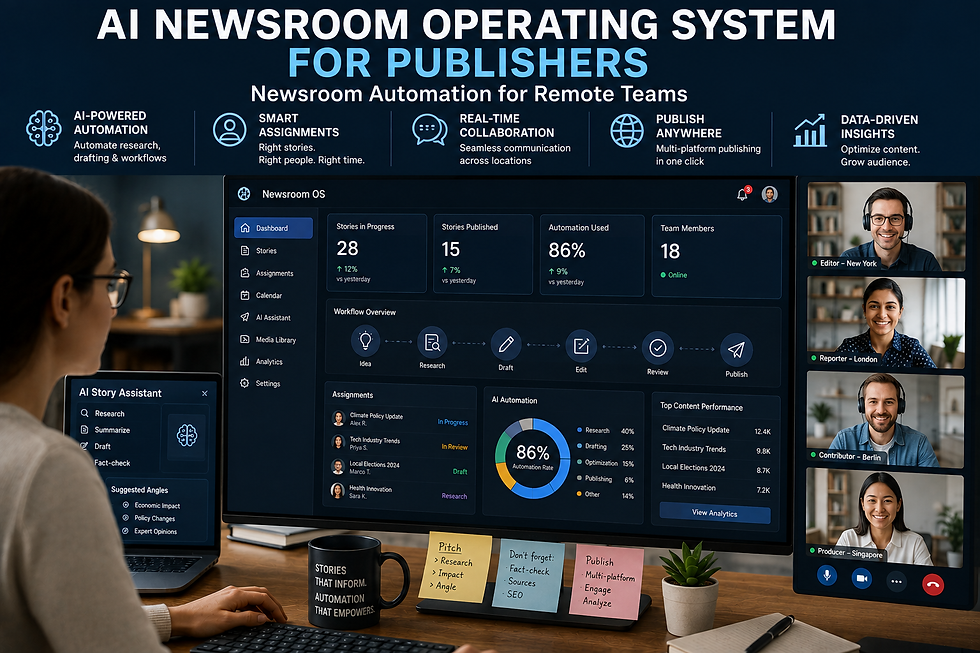
Managing Remote Newsrooms More Efficiently
Remote work has become a normal part of digital publishing. Many news organizations now have writers, editors, designers, and content managers working from different cities or even different countries. While this offers flexibility, it also creates challenges in communication, content management, and publishing.
An AI Newsroom Operating System for Publishers helps solve these challenges by bringing every part of the newsroom into one connected platform. It allows remote teams to collaborate smoothly, manage assignments, and publish content faster without losing editorial quality.
How Automation Supports Remote Teams
When newsroom members work in different locations, keeping everyone updated can be difficult. AI-powered automation simplifies this process by organizing tasks, tracking article progress, and notifying team members about important updates.
Editors can assign stories, writers can submit drafts, and reviewers can provide feedback from the same platform. This reduces delays and ensures that every article moves through the publishing process efficiently.
Some modern publishing platforms, including solutions similar to NewsBolts, help combine AI-powered workflows with editorial management, making collaboration easier for distributed news teams.
Better Collaboration and Faster Publishing
A connected newsroom allows every team member to know what is happening in real time. Instead of using multiple tools for communication, editing, and publishing, everything is managed in one place.
Automation also handles repetitive tasks such as organizing articles, scheduling publication, updating metadata, and preparing content for distribution. This gives journalists and editors more time to focus on research, reporting, and creating high-quality stories.
For breaking news, this speed can make a significant difference.
Improving Productivity Without Reducing Quality
Automation is designed to support journalists, not replace them. AI can assist with routine work, but editors remain responsible for reviewing content, verifying facts, and maintaining editorial standards.
This balance allows publishers to increase productivity while protecting the accuracy and credibility of their reporting. Every article still benefits from human judgment before it reaches readers.
As a result, remote teams can work more efficiently without compromising quality.
Preparing for the Future of Digital Publishing
The publishing industry continues to evolve, and remote collaboration is expected to remain an important part of newsroom operations. AI-powered systems will continue improving workflow management, communication, content planning, and publishing efficiency.
Publishers that invest in modern newsroom technology today will be better prepared to manage larger teams, cover more stories, and adapt to changing audience expectations.
Conclusion
An AI Newsroom Operating System for Publishers makes newsroom automation more effective for remote teams by connecting writers, editors, and publishers through one intelligent platform. It simplifies collaboration, reduces manual work, and speeds up content publishing while maintaining high editorial standards. As digital journalism continues to grow, AI-powered newsroom automation will help publishers build more productive, flexible, and connected editorial teams.



Comments